What is Human Rights Day?
Human Rights Day commemorates the anniversary of the adoption of the Universal Declaration of Human Rights(UDHR). This historic document defines the fundamental rights and freedoms that every individual deserves, regardless of nationality, gender, race, religion, or social status. It also lays the foundation for modern human rights laws and inspiresmovements that continue to fight for justice worldwide. Human Rights Day often features cultural events and performances, public meetings and seminars, and other educational activities in the promotion of human rights. Furthermore, the day serves as the occasion for protests and other demonstrations in support of human rights, especially in countries that have frequently been beset by allegations of rights violations.
2025 Theme: Holocaust Remembrance for Dignity and Human Rights
The theme for Human Rights Day 2025 is Holocaust Remembrance for Dignity and Human Rights. This year marks the 80th Anniversary of the end of World War II. The UDHR was established in 1948, written and codified in response to the horrors and atrocities committed in the Holocaust against the Jewish people, the Roma and Sinti communities, people with disabilities, and LGBTIQ+ individuals. At the UN’s meeting on the International Day of Commemoration in Memory of the Victims of the Holocaust in January earlier this year, Antonio Guterres, the UN Secretary-General, said that the responsibility to ensure this history is never forgotten “belongs to every one of us… Remembrance is not only a moral act – remembrance is a call to action.” When discussing the UDHR, Guterres added that the document is a “pure expression of our shared humanity,” that “in dark times it remains a shining light.” He finished his speech saying, “We will never forget. And we will never waver in that fight.”
SRHR work and Human Rights
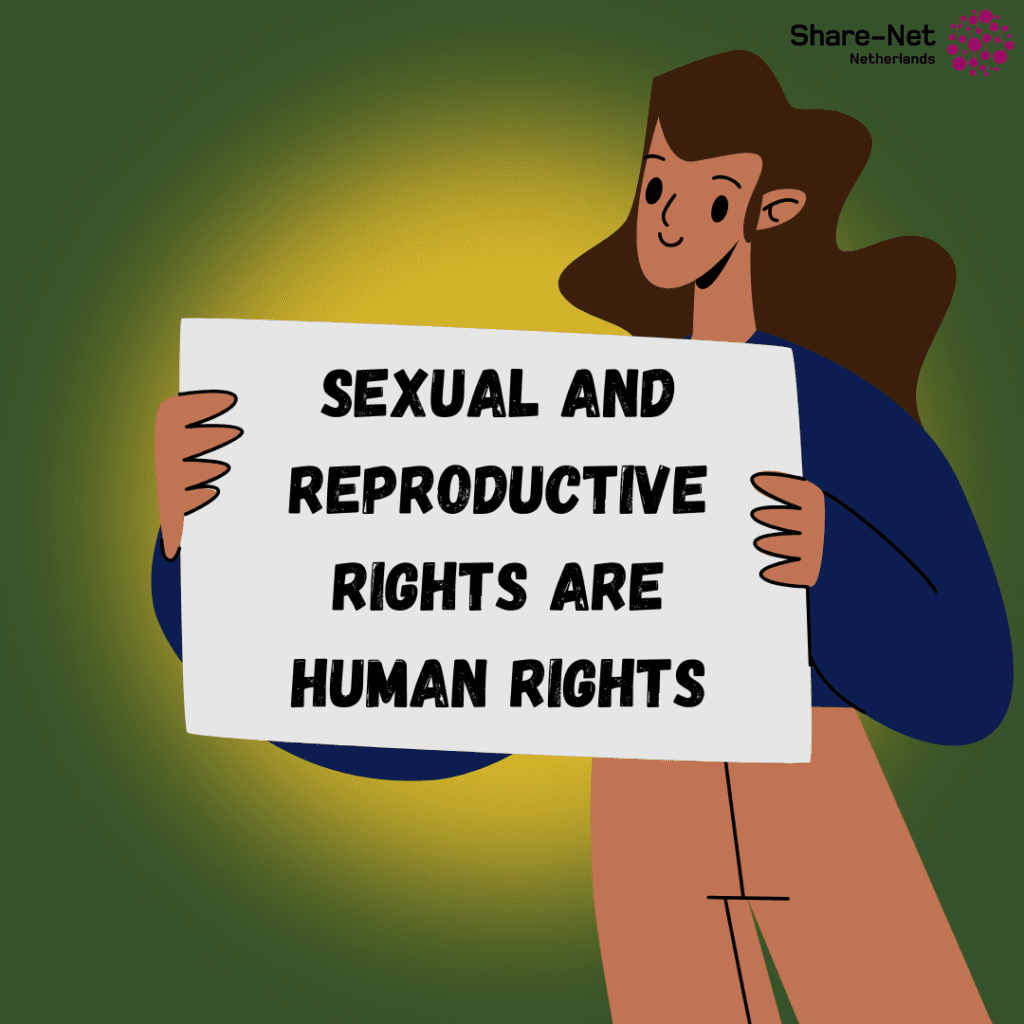
Sexual and reproductive health and rights are at the core of the fight for human rights. Access to reproductive care continues to be a politically contentious topic, keeping women and girls away from understanding their own bodies and reproductive functioning. All over the world, sexual and reproductive care and political rights are inconsistent and inaccessible. Sexual and reproductive rights have been stripped away and limited, severely impacting the health and well-being of women and girls everywhere, “Upholding reproductive rights is crucial for the health of women and girls worldwide, and access to a safe abortion is central to this, yet policies in several countries either severely limit or actively prevent access to appropriate abortion care and services,” (Moyer 2022). The fight for access to abortion and contraceptives is ongoing, illustrating that gender-based violence (GVB) extends beyond direct violence on and offline. Limiting access to SRHR is controlling and dangerous, “The reality is that such barriers continue to represent a threat to the health of women worldwide. Evidence-based changes to policy and practice that break down barriers and build new roads are required to enable women to access the healthcare they need,” (Moyer 2022). If we want to ensure health, safety, and human rights for all people, we must include the fight for sexual and reproductive rights in our activism.
Closing Out the 16 Days of Activism
As the 2025 16 Days of Activism campaign comes to a close, we continue to pursue our goal of granting access to SRHR for people worldwide. We believe in the power of activism and bringing people together from all professional and academic fields to ensure success in the work that we do. We never stop fighting for a better future and, together, we can make change happen.
References
https://pmc.ncbi.nlm.nih.gov/articles/PMC9930478
https://www.ohchr.org/en/women/sexual-and-reproductive-health-and-rights